Crossing the Blues
Showing posts with label Super Cars. Show all posts

Tuesday, December 8, 2009

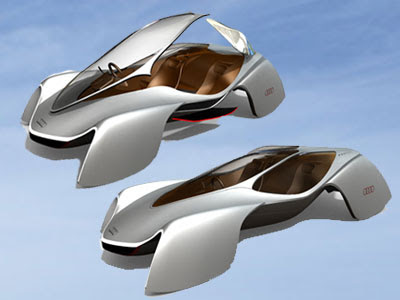
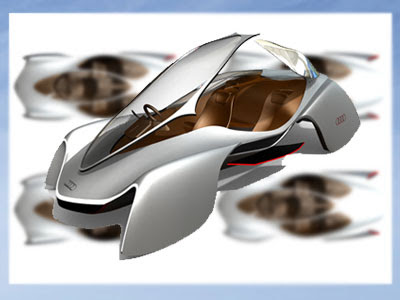
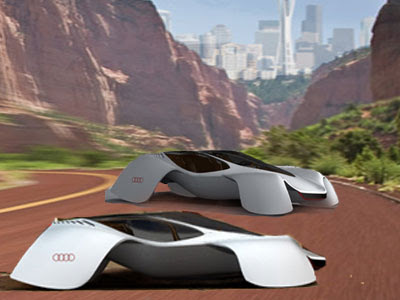
2009 Audi Avatar concept Car is an electric powered supercar concept

2009 Audi Avatar concept Car

The Audi Avatar is a concept vehicle which was created by Edwin Conan (Yi Yuan), a graduate of RMIT (Royal Melbourne Institute of Technology) University in Australia. The Avatar was developed during Edwin's final year at the university as part of his degree project.
The Avatar is an electric powered supercar concept which is designed for about 20-25 years in the future. The shape was inspired by the 1937 Auto Union Type C Streamline racing car, and both cars - even though they are separated by a century - share the same clinical lines and pronounced wheel arches.
2009 Audi Avatar concept Car

There are no conventional doors to the Avatar, instead the vehicle utilizes a three-part canopy which opens upward to provide entry and exit. The main canopy opens forward together with the steering wheel and the dashboard, while two smaller canopies above the passenger seats open backwards. At the same time a panel in the bodywork drops down to act as a step.
2009 Audi Avatar concept Car

The interior of the Audi Avatar features a three-seat layout with the driver sitting in a central position forward of the passenger seats. The driver is met with a futuristic dashboard which consists of a transparent LCD display which provides all essential driving data. In the center of the steering wheel is another screen which provides navigation information. Additional information can also be projected onto the canopy to provide a heads-up-display similar to those found in high performance aircraft.
Thanks to a drive-by-wire system the Avatar's steering wheel can be swapped out quickly and easily in favor of a joystick or even a keypad depending on driver preferences.
2009 Audi Avatar concept Car

Powering the Audi Avatar is an all-electric drivetrain which comprises of four individual electric motors (one for each wheel), and a pair of high-performance battery packs. The battery packs are split in two to provide better weight distribution, one is located at the front and one at the rear. In total the projected output is 544 horsepower, and 4,500 Nm (3,319 lb-ft) of torque. This gives the car a theoretical top speed of 223 mph (360 Km/h), and a 0-62 mph (100 km/h) time of 2.9 seconds.
2009 Audi Avatar concept Car

The wheels of the Avatar are housed inside the car's four 'legs'. The legs are constructed from a deformable material which allows it to change shape when the wheel is turned. To increase the vehicle's agility and handling, the Avatar features a four-wheel-steering system. The front wheels provide most of the steering, while the rear wheels can turn up to 10 degrees.

2009 Audi Avatar concept Car is an electric powered supercar concept

2009 Audi Avatar concept Car

The Audi Avatar is a concept vehicle which was created by Edwin Conan (Yi Yuan), a graduate of RMIT (Royal Melbourne Institute of Technology) University in Australia. The Avatar was developed during Edwin's final year at the university as part of his degree project.
The Avatar is an electric powered supercar concept which is designed for about 20-25 years in the future. The shape was inspired by the 1937 Auto Union Type C Streamline racing car, and both cars - even though they are separated by a century - share the same clinical lines and pronounced wheel arches.
2009 Audi Avatar concept Car

There are no conventional doors to the Avatar, instead the vehicle utilizes a three-part canopy which opens upward to provide entry and exit. The main canopy opens forward together with the steering wheel and the dashboard, while two smaller canopies above the passenger seats open backwards. At the same time a panel in the bodywork drops down to act as a step.
2009 Audi Avatar concept Car

The interior of the Audi Avatar features a three-seat layout with the driver sitting in a central position forward of the passenger seats. The driver is met with a futuristic dashboard which consists of a transparent LCD display which provides all essential driving data. In the center of the steering wheel is another screen which provides navigation information. Additional information can also be projected onto the canopy to provide a heads-up-display similar to those found in high performance aircraft.
Thanks to a drive-by-wire system the Avatar's steering wheel can be swapped out quickly and easily in favor of a joystick or even a keypad depending on driver preferences.
2009 Audi Avatar concept Car

Powering the Audi Avatar is an all-electric drivetrain which comprises of four individual electric motors (one for each wheel), and a pair of high-performance battery packs. The battery packs are split in two to provide better weight distribution, one is located at the front and one at the rear. In total the projected output is 544 horsepower, and 4,500 Nm (3,319 lb-ft) of torque. This gives the car a theoretical top speed of 223 mph (360 Km/h), and a 0-62 mph (100 km/h) time of 2.9 seconds.
2009 Audi Avatar concept Car

The wheels of the Avatar are housed inside the car's four 'legs'. The legs are constructed from a deformable material which allows it to change shape when the wheel is turned. To increase the vehicle's agility and handling, the Avatar features a four-wheel-steering system. The front wheels provide most of the steering, while the rear wheels can turn up to 10 degrees.

Wednesday, November 25, 2009

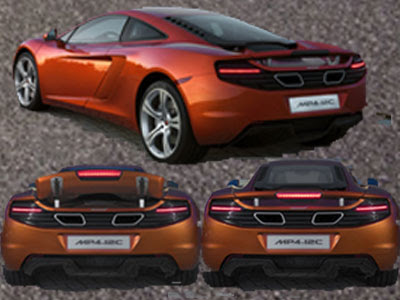
2011 McLaren MP4-12C Super Sports Concept Car pure McLaren, Powered by a twin-turbocharged 3.8 litre, V8 Engine


2011 McLaren MP4-12C

The independent car division based at the McLaren Technology Centre in Woking, England,the McLaren MP4-12C is revealed as the first in a range of high-performance sports cars from McLaren Automotive.The 12C, and future models within the range, will challenge the world's best sports cars, benefiting from the expertise and virtuosity of the McLaren Group.
Through a rich modern history, McLaren's automotive division has already built the world's most critically acclaimed supercar, the McLaren F1 (1993-1998) and the world's best-selling luxury supercar, the Mercedes-Benz SLR McLaren (2003-2009). McLaren Automotive now looks to the future with a new range of revolutionary sports cars.
At its heart, the McLaren MP4-12C features a revolutionary carbon fibre chassis structure, the Carbon MonoCell: the first time a car in this market segment is based around such a strong and lightweight racing car engineering solution and the first time any car has ever featured a one-piece carbon fibre structure.
2011 McLaren MP4-12C

Martin Whitmarsh : "McLaren has for years offered a potent mix of race car and road car technologies. This combination of McLaren's performance heritage, and future demands on what is expected of high performance sports cars in the 21st century, gave us a head-start when we embarked on this project. The 12C, and future variants, draws on the spirit of Formula 1 and delivers real-world technological advances."
The first car from the new company, the McLaren MP4-12C, is a high performance two-seat mid-engine model in the 'core' sports car market segment for cars costing between £125,000 and £175,000.It goes on sale through a dedicated, worldwide retailer network in early 2011.
All the parts of the McLaren MP4-12C are bespoke and unique to this car. Everything from the engine right down to the tailor-made switches and buttons is pure McLaren: nothing has come from another manufacturer's parts bin.
The 12C is powered by a bespoke McLaren 'M838T' 3.8 litre, V8 twin-turbo engine producing around 600bhp, driving through a McLaren seven speed Seamless Shift dual clutch gearbox (SSG). It is targeting not only new standards for power and performance in its sector, but also class-leading fuel economy and CO2 emissions; supported by McLaren's experience of active aerodynamics to aid cooling, grip, handling and road holding.
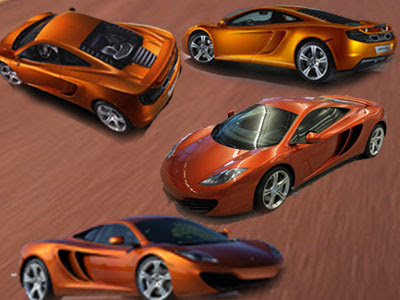
2011 McLaren MP4-12C

"The 12C is all about performance," said Sheriff. "And in McLaren, we have a very broad definition of performance. We don't just look at the traditional one-dimensional parameters like top speed, we focus equally on useable measures such as in-gear acceleration times, braking performance in all conditions, and efficiency of power delivery combined with the lowest possible fuel consumption and CO2 emissions. Sure, 12C is very fast, but it is also the most efficient, most driveable high-performance sports car in the world.
Thorough engineering and market research led to concept development and a clear decision in favour of a mid-engined two door high performance sports car. Intensive work was carried out in the wind tunnel and the driving simulator to ensure that the new car would inherently have superb dynamic qualities.
The McLaren MP4-12C design follows similar principles to McLaren's Formula 1 cars, and the legendary McLaren F1, where everything is for a reason and all lines, surfaces, and details are designed with a job in mind as much as styled. This ensures that the 12C communicates its engineering through its styling and will remain timeless as a piece of automotive design.
"By the time the 12C is launched in 2011 we expect the economic conditions to be much improved. We have already seen significant interest in the car and the supply of the 12C will be relatively scarce; in its first year we plan to produce just 1,000 cars which represents only 3.5 per cent of the 'core' market," explained Antony Sheriff.
2011 McLaren MP4-12C

The McLaren MP4-12C is powered by a twin-turbocharged, 3.8 litre 90 V8 engine - the 'M838T'. This marks the start of a new era in 'core' segment sports cars - smaller capacity, lighter weight, higher efficiency and more economical power units. The engine has the highest specific power output in its segment which, when allied to its low weight carbon composite chassis, delivers exemplary power- and torque-to-weight ratios.The McLaren engine revs to 8,500rpm, has quick transient throttle response and delivers its abundant torque throughout the rev range. A staggering 80 per cent of torque is available at below 2,000rpm, ensuring great driveability and no need to floor the throttle to deliver performance.
The McLaren MP4-12C has been designed around a demanding mechanical package that puts emphasis on aerodynamics, compact dimensions, performance and efficiency, practicality and comfort. Although the design of the 12C was driven by aerodynamics, it aims to remain contemporary and elegant throughout its lifetime as well as distinctive among its peers.
"The 12C design was therefore led by aerodynamics. At McLaren we have been able to use the Formula 1 techniques and the huge expertise that the company has amassed at the pinnacle of the sport," explained Stephenson.
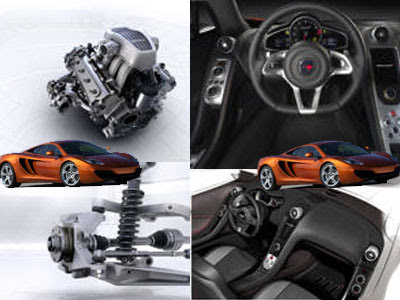
2011 McLaren MP4-12C

Aerodynamic efficiency drove the 12C's design. High downforce helps maintain traction, cornering ability and stability while low drag aids top speed and acceleration. It has a completely flat underbody and smooth upper body surfaces to yield a highly effective drag coefficient and generate very high levels of balanced downforce at high speed.

2011 McLaren MP4-12C Super Sports Concept Car pure McLaren, Powered by a twin-turbocharged 3.8 litre, V8 Engine


2011 McLaren MP4-12C

The independent car division based at the McLaren Technology Centre in Woking, England,the McLaren MP4-12C is revealed as the first in a range of high-performance sports cars from McLaren Automotive.The 12C, and future models within the range, will challenge the world's best sports cars, benefiting from the expertise and virtuosity of the McLaren Group.
Through a rich modern history, McLaren's automotive division has already built the world's most critically acclaimed supercar, the McLaren F1 (1993-1998) and the world's best-selling luxury supercar, the Mercedes-Benz SLR McLaren (2003-2009). McLaren Automotive now looks to the future with a new range of revolutionary sports cars.
At its heart, the McLaren MP4-12C features a revolutionary carbon fibre chassis structure, the Carbon MonoCell: the first time a car in this market segment is based around such a strong and lightweight racing car engineering solution and the first time any car has ever featured a one-piece carbon fibre structure.
2011 McLaren MP4-12C

Martin Whitmarsh : "McLaren has for years offered a potent mix of race car and road car technologies. This combination of McLaren's performance heritage, and future demands on what is expected of high performance sports cars in the 21st century, gave us a head-start when we embarked on this project. The 12C, and future variants, draws on the spirit of Formula 1 and delivers real-world technological advances."
The first car from the new company, the McLaren MP4-12C, is a high performance two-seat mid-engine model in the 'core' sports car market segment for cars costing between £125,000 and £175,000.It goes on sale through a dedicated, worldwide retailer network in early 2011.
All the parts of the McLaren MP4-12C are bespoke and unique to this car. Everything from the engine right down to the tailor-made switches and buttons is pure McLaren: nothing has come from another manufacturer's parts bin.
The 12C is powered by a bespoke McLaren 'M838T' 3.8 litre, V8 twin-turbo engine producing around 600bhp, driving through a McLaren seven speed Seamless Shift dual clutch gearbox (SSG). It is targeting not only new standards for power and performance in its sector, but also class-leading fuel economy and CO2 emissions; supported by McLaren's experience of active aerodynamics to aid cooling, grip, handling and road holding.

2011 McLaren MP4-12C

"The 12C is all about performance," said Sheriff. "And in McLaren, we have a very broad definition of performance. We don't just look at the traditional one-dimensional parameters like top speed, we focus equally on useable measures such as in-gear acceleration times, braking performance in all conditions, and efficiency of power delivery combined with the lowest possible fuel consumption and CO2 emissions. Sure, 12C is very fast, but it is also the most efficient, most driveable high-performance sports car in the world.
Thorough engineering and market research led to concept development and a clear decision in favour of a mid-engined two door high performance sports car. Intensive work was carried out in the wind tunnel and the driving simulator to ensure that the new car would inherently have superb dynamic qualities.
The McLaren MP4-12C design follows similar principles to McLaren's Formula 1 cars, and the legendary McLaren F1, where everything is for a reason and all lines, surfaces, and details are designed with a job in mind as much as styled. This ensures that the 12C communicates its engineering through its styling and will remain timeless as a piece of automotive design.
"By the time the 12C is launched in 2011 we expect the economic conditions to be much improved. We have already seen significant interest in the car and the supply of the 12C will be relatively scarce; in its first year we plan to produce just 1,000 cars which represents only 3.5 per cent of the 'core' market," explained Antony Sheriff.
2011 McLaren MP4-12C

The McLaren MP4-12C is powered by a twin-turbocharged, 3.8 litre 90° V8 engine - the 'M838T'. This marks the start of a new era in 'core' segment sports cars - smaller capacity, lighter weight, higher efficiency and more economical power units. The engine has the highest specific power output in its segment which, when allied to its low weight carbon composite chassis, delivers exemplary power- and torque-to-weight ratios.The McLaren engine revs to 8,500rpm, has quick transient throttle response and delivers its abundant torque throughout the rev range. A staggering 80 per cent of torque is available at below 2,000rpm, ensuring great driveability and no need to floor the throttle to deliver performance.
The McLaren MP4-12C has been designed around a demanding mechanical package that puts emphasis on aerodynamics, compact dimensions, performance and efficiency, practicality and comfort. Although the design of the 12C was driven by aerodynamics, it aims to remain contemporary and elegant throughout its lifetime as well as distinctive among its peers.
"The 12C design was therefore led by aerodynamics. At McLaren we have been able to use the Formula 1 techniques and the huge expertise that the company has amassed at the pinnacle of the sport," explained Stephenson.
2011 McLaren MP4-12C

Aerodynamic efficiency drove the 12C's design. High downforce helps maintain traction, cornering ability and stability while low drag aids top speed and acceleration. It has a completely flat underbody and smooth upper body surfaces to yield a highly effective drag coefficient and generate very high levels of balanced downforce at high speed.

Thursday, November 19, 2009

Keating TKR Super Cars LS7 engine, two turbochargers to make its power skyrocket.

Keating TKR/SKR Super Cars

The search for the fastest car in the world title is still far from complete. If the Bugatti Veyron seems to be unbeatable with its 1001 HP and more than 400 km / h, it was the South-South cooperation Ultimate Aero and pushed the bar a little higher, at exactly 413.83 km / h with its HP 1199 and 1247 kg. Now, British car manufacturers want to regain the crown from the possession of the McLaren F1 in a manner very convincing, more precisely with the TKR Keating. Since there is no official data on the performance has been made available on that day, you can imagine what 1190 kg and 1500 hp supercar can do, but you do not have much imagination to the records May rapidly in dust…
Keating TKR/SKR Super Cars

The new car version and its soft, the Swedish kroner, were last Wednesday in South Portland, United Kingdom. The two are on a steel space frame structure, but it allows a structure made of carbon fiber to support the weight even more. The bodies are made of fiberglass, carbon fiber, but also the facilities are available as an option. These vehicles are Keating 4.31 m long, 1.87 m wide and 1.15 m in height. The British automobile manufacturer is already orders for them, but the supplies did not occur by the end of the year. No hurry, because the customers have to wait for their luck in any case: SKR and the TKR is being built in a limited quantity to them and to ensure that only quality standards.
Keating TKR/SKR Super Cars

British supercar manufacturer and challenger for the production car world land speed record, Keating, will have its 260.1mph TKR supercar on display at this year’s MPH Show featuring Top Gear Live at London’s Earls Court on 5 November.
Keating TKR/SKR Super Cars

In the first of two runs on the Salt Lake Flats in California last month, the remarkable 7.0 litre, 1800 BHP Keating TKR smashed the current record, adding an extra 3 mph to the top speed of existing title holder, the Shelby Aero TT.The TKR will probably have the LS7 engine as its base, but two turbochargers are expected to make its power skyrocket to 1,500 hp. This number can be even higher, since the supercar is still under development.Now the Manchester based company must do it again to ensure entry in the Guinness Book of World Records.
Keating TKR/SKR Super Cars

But before it returns to California, the breathtaking Keating TKR will make its MPH show debut in London tomorrow in front of capacity crowds.
Tony Keating, founder of Keating Supercars, said: “The Keating TKR realises our ambition to take on the world’s finest supercars and win. This car rivals them all for looks, handling, performance and exclusivity. And best of all, it’s British.”

Keating TKR Super Cars LS7 engine, two turbochargers to make its power skyrocket.

Keating TKR/SKR Super Cars

The search for the fastest car in the world title is still far from complete. If the Bugatti Veyron seems to be unbeatable with its 1001 HP and more than 400 km / h, it was the South-South cooperation Ultimate Aero and pushed the bar a little higher, at exactly 413.83 km / h with its HP 1199 and 1247 kg. Now, British car manufacturers want to regain the crown from the possession of the McLaren F1 in a manner very convincing, more precisely with the TKR Keating. Since there is no official data on the performance has been made available on that day, you can imagine what 1190 kg and 1500 hp supercar can do, but you do not have much imagination to the records May rapidly in dust…
Keating TKR/SKR Super Cars

The new car version and its soft, the Swedish kroner, were last Wednesday in South Portland, United Kingdom. The two are on a steel space frame structure, but it allows a structure made of carbon fiber to support the weight even more. The bodies are made of fiberglass, carbon fiber, but also the facilities are available as an option. These vehicles are Keating 4.31 m long, 1.87 m wide and 1.15 m in height. The British automobile manufacturer is already orders for them, but the supplies did not occur by the end of the year. No hurry, because the customers have to wait for their luck in any case: SKR and the TKR is being built in a limited quantity to them and to ensure that only quality standards.
Keating TKR/SKR Super Cars

British supercar manufacturer and challenger for the production car world land speed record, Keating, will have its 260.1mph TKR supercar on display at this year’s MPH Show featuring Top Gear Live at London’s Earls Court on 5 November.
Keating TKR/SKR Super Cars

In the first of two runs on the Salt Lake Flats in California last month, the remarkable 7.0 litre, 1800 BHP Keating TKR smashed the current record, adding an extra 3 mph to the top speed of existing title holder, the Shelby Aero TT.The TKR will probably have the LS7 engine as its base, but two turbochargers are expected to make its power skyrocket to 1,500 hp. This number can be even higher, since the supercar is still under development.Now the Manchester based company must do it again to ensure entry in the Guinness Book of World Records.
Keating TKR/SKR Super Cars

But before it returns to California, the breathtaking Keating TKR will make its MPH show debut in London tomorrow in front of capacity crowds.
Tony Keating, founder of Keating Supercars, said: “The Keating TKR realises our ambition to take on the world’s finest supercars and win. This car rivals them all for looks, handling, performance and exclusivity. And best of all, it’s British.”

Thursday, November 12, 2009

The Russian Supercar Marussia B1 Powered by 3.5 litre V6 Engine.


Marussia B1 Russian supercar

Marussia B1 a Russian supercar 3.5 litre V6 Engine.
The Marussia B1 is a Russian made supercar developed entirely by a team of Russian designers and engineers.The B1's aerodynamic bodywork was developed courtesy of a competition which invited young Russian designers to submit their concepts to the company. The winning design would then be used to help shape the final product.The defining characteristics of the Marussia B1's exterior design are the aggressive, sharp lines and the two-tone paintwork. And despite the B1 being Marussia's first attempt at a sports car the end result is appealing from a styling point of view.
Marussia B1 Russian supercar

Unfortunately despite the supercar looks the Marussia B1's drive train is not up to supercar levels. Or even premium sports car numbers. Located in a mid-mounted position is a 3.5 litre V6 which produces 245 horsepower and 330 Nm of torque @ 3,600 rpm. Marussia claim this is good for a 5 second 0-60 time, and a 155 mph top speed. Thankfully however the company is working on developing different drivetrain options which should help the performance match the appearance. Marussia B1 Russian supercar

The interior of the Marussia B1, which was developed through a collaboration between Italian and Russian designers, features a pair of reclining deeply-bo
lstered sports seats and a squared off three-spoke sports steering wheel. The dash of the Marussia B1 features three separate LCD displays which provide information for both driving functions and the entertainment systems. The displays are touch screen, but the functions can also be controlled with the help of a joystick mounted on the centre console.The whole interior can be upholstered in a variety of different colors and finishes to suit the owners tastes.

The Russian Supercar Marussia B1 Powered by 3.5 litre V6 Engine.


Marussia B1 Russian supercar

Marussia B1 a Russian supercar 3.5 litre V6 Engine.
The Marussia B1 is a Russian made supercar developed entirely by a team of Russian designers and engineers.The B1's aerodynamic bodywork was developed courtesy of a competition which invited young Russian designers to submit their concepts to the company. The winning design would then be used to help shape the final product.The defining characteristics of the Marussia B1's exterior design are the aggressive, sharp lines and the two-tone paintwork. And despite the B1 being Marussia's first attempt at a sports car the end result is appealing from a styling point of view.
Marussia B1 Russian supercar

Unfortunately despite the supercar looks the Marussia B1's drive train is not up to supercar levels. Or even premium sports car numbers. Located in a mid-mounted position is a 3.5 litre V6 which produces 245 horsepower and 330 Nm of torque @ 3,600 rpm. Marussia claim this is good for a 5 second 0-60 time, and a 155 mph top speed. Thankfully however the company is working on developing different drivetrain options which should help the performance match the appearance. Marussia B1 Russian supercar

The interior of the Marussia B1, which was developed through a collaboration between Italian and Russian designers, features a pair of reclining deeply-bo
lstered sports seats and a squared off three-spoke sports steering wheel. The dash of the Marussia B1 features three separate LCD displays which provide information for both driving functions and the entertainment systems. The displays are touch screen, but the functions can also be controlled with the help of a joystick mounted on the centre console.The whole interior can be upholstered in a variety of different colors and finishes to suit the owners tastes.

Monday, November 9, 2009

Mansory Chopster Porsche Cayenne Super Sports Cars Modified V8 Engine


Mansory Chopster Porsche Cayenne

Based on the Porsche Cayenne Turbo S, the Mansory Chopster features a new body styling, aerodynamic elements, performance upgrades and various interior refinements.MANSORY, the refining specialist for super sports cars has worked on the latest generation Chopster – a holistic SUV artwork with the exclusiveness and precise processing of a Swiss clockwork that will make its world debut at the 2009 Frankfurt Motor Show.
The MANSORY Chopster Porsche Cayenne is powered by a modified V8 engine that develops 710 hp / 522 kW and 900 Nm of torque. The top speed of the MANSORY Chopster Porsche Cayenne, as the tuner says, is 302 km/h. The MANSORY Chopster Porsche Cayenne comes with a sport exhaust system with an optimised off-gas stream, a racing header and a four-pipe baffler, a larger turbo, a re-programmed ECU and a new air intake.
Mansory Chopster Porsche Cayenne

The fully forged 11x23 inch mono block rims in turbine design and the Dunlop Sport Maxx GT-tyres sized 315/25/23 perfectly fit under the broadened Chopster wing. By the Mansory sport module for air suspension control, the XXL-wheels are additionally enhanced. If desired, the SUV´s centre of gravity can be lowered by 45 millimetres.
Whether front- or rear apron, doors, bonnet or the wings which broaden the cars by 80 millimeters – all components are formed out of carbon and hardened under strong pressure and high temperatures in the autoclave.
The interior is lined with most delicate materials rendering a comfortable feeling. The leather of the Chopster interior is extremely hard wearing, but yet enormously soft and finished by expert hand. For the Chopster interior, the MANSORY interior designers only use flawless leather skins and accentuate them with discreet decorative stitches.
Mansory Chopster Porsche Cayenne

Equipped with two monitors in the centre console as well as DVD-player and laptop with internet connection, the car offers everything the clientele desires. The newly designed airbag sports steering wheel, the aluminium pedals and the carbon fibre applications perfect the exquisite overall impression in the Chopster. MANSORY achieved the perfect symbiosis of dynamic functionality and a luxurious atmosphere.

Mansory Chopster Porsche Cayenne Super Sports Cars Modified V8 Engine


Mansory Chopster Porsche Cayenne

Based on the Porsche Cayenne Turbo S, the Mansory Chopster features a new body styling, aerodynamic elements, performance upgrades and various interior refinements.MANSORY, the refining specialist for super sports cars has worked on the latest generation Chopster – a holistic SUV artwork with the exclusiveness and precise processing of a Swiss clockwork that will make its world debut at the 2009 Frankfurt Motor Show.
The MANSORY Chopster Porsche Cayenne is powered by a modified V8 engine that develops 710 hp / 522 kW and 900 Nm of torque. The top speed of the MANSORY Chopster Porsche Cayenne, as the tuner says, is 302 km/h. The MANSORY Chopster Porsche Cayenne comes with a sport exhaust system with an optimised off-gas stream, a racing header and a four-pipe baffler, a larger turbo, a re-programmed ECU and a new air intake.
Mansory Chopster Porsche Cayenne

The fully forged 11x23 inch mono block rims in turbine design and the Dunlop Sport Maxx GT-tyres sized 315/25/23 perfectly fit under the broadened Chopster wing. By the Mansory sport module for air suspension control, the XXL-wheels are additionally enhanced. If desired, the SUV´s centre of gravity can be lowered by 45 millimetres.
Whether front- or rear apron, doors, bonnet or the wings which broaden the cars by 80 millimeters – all components are formed out of carbon and hardened under strong pressure and high temperatures in the autoclave.
The interior is lined with most delicate materials rendering a comfortable feeling. The leather of the Chopster interior is extremely hard wearing, but yet enormously soft and finished by expert hand. For the Chopster interior, the MANSORY interior designers only use flawless leather skins and accentuate them with discreet decorative stitches.
Mansory Chopster Porsche Cayenne

Equipped with two monitors in the centre console as well as DVD-player and laptop with internet connection, the car offers everything the clientele desires. The newly designed airbag sports steering wheel, the aluminium pedals and the carbon fibre applications perfect the exquisite overall impression in the Chopster. MANSORY achieved the perfect symbiosis of dynamic functionality and a luxurious atmosphere.

Sunday, November 8, 2009

MANSORY Stallone The Super Sports Car Ferrari 599 GTB Fiorano Supercharging powertrain V12 Engine


MANSORY Stallone Ferrari 599 GTB Fiorano

MANSORY Stallone – an exquisite power pack based on the Ferrari 599 GTB Fiorano
As a specialist for customisation of Aston Martin, Bentley and Rolls Royce automobiles, MANSORY has long been an institution. Now, the company from Brand in Bavaria has tackled the Ferrari 599 GTB Fiorano. With luxurious as well as sporty modifications, MANSORY proves that the company also has a clear understanding of customising Italian super sports cars. Especially light body components made of carbon, a powerful increase to the engine performance and an interior covered with the finest ostrich leather fulfil the car desires of the exclusive clientele.MANSORY Stallone Ferrari 599 GTB Fiorano

More Bounce for the Italian Stallion
MANSORY pays special attention to performance optimisation with which the car from Maranello made the sprint from zero to 100 kph two tenths faster than the series version (3.7 seconds). The propulsion is only over at 340 kph. Thus the modification, called the Stallone, impressively fills the gap to the fast, 350 kph sports car brother, the Enzo. The engine components newly developed by the MANSORY technicians are responsible for this. The performance kit includes high-performance compressors and custom made intercooling. The supercharging of the V12 power train is supported by a sport air filter with higher air throughput as well as modified control electronics. This increases the performance of the large 6.0 litre twelve cylinder engine from 620 to 720 HP. The torque increased by an additional 92 Nm. The sport rear muffler made of stainless steel underscores the sporty appearance of the MANSORY Stallone with its impressive sound.
MANSORY Stallone Ferrari 599 GTB Fiorano

Perfect Symbiosis: the MANSORY forged turbine-wheel and the Dunlop Sport Maxx
In order to accommodate the increased performance, the company developed especially light forged wheels with a 9 x 20 inch size for the front axle and 11.5 x 21 inch for the back axle.
11.5 x 21 inch for the back axle. At only 13 kg for one of the front axle rims, the MANSORY wheel is one of the absolute lightweights. By using weight-saving aluminium alloys and with the resulting reduction of the unsprung mass, the acceleration, breaking distance as well as the handling are improved considerably. The SP Sport Maxx model of Dunlop high-performance tyres developed together with MANSORY are a perfect match. The front tyres are 255/30 and the back ones are 325/30. The suspension spring also creates a sporty flair, which lowers the centre of gravity of the super sports car by 30 millimetres and moreover emphasises the wheel/tyre combination even more.
The most exquisite materials, processed with the greatest traditional craftsmanship distinguish the interior of the MANSORY Stallone. The leather used by MANSORY for the interior is particularly durable but still extremely soft. The unique grain of the unusual leather combined with the stylish ornamental seams and the exposed carbon appliqués convey both elegance as well as sportiness in the interior. Masterful handiwork, individual styling, and the highest quality is found wherever one chooses to look. The pedals made of aluminium, the illuminated door entry strips and the ergonomically redesigned sport steering wheel create additional optical highlights.

MANSORY Stallone The Super Sports Car Ferrari 599 GTB Fiorano Supercharging powertrain V12 Engine


MANSORY Stallone Ferrari 599 GTB Fiorano

MANSORY Stallone – an exquisite power pack based on the Ferrari 599 GTB Fiorano
As a specialist for customisation of Aston Martin, Bentley and Rolls Royce automobiles, MANSORY has long been an institution. Now, the company from Brand in Bavaria has tackled the Ferrari 599 GTB Fiorano. With luxurious as well as sporty modifications, MANSORY proves that the company also has a clear understanding of customising Italian super sports cars. Especially light body components made of carbon, a powerful increase to the engine performance and an interior covered with the finest ostrich leather fulfil the car desires of the exclusive clientele.MANSORY Stallone Ferrari 599 GTB Fiorano

More Bounce for the Italian Stallion
MANSORY pays special attention to performance optimisation with which the car from Maranello made the sprint from zero to 100 kph two tenths faster than the series version (3.7 seconds). The propulsion is only over at 340 kph. Thus the modification, called the Stallone, impressively fills the gap to the fast, 350 kph sports car brother, the Enzo. The engine components newly developed by the MANSORY technicians are responsible for this. The performance kit includes high-performance compressors and custom made intercooling. The supercharging of the V12 power train is supported by a sport air filter with higher air throughput as well as modified control electronics. This increases the performance of the large 6.0 litre twelve cylinder engine from 620 to 720 HP. The torque increased by an additional 92 Nm. The sport rear muffler made of stainless steel underscores the sporty appearance of the MANSORY Stallone with its impressive sound.
MANSORY Stallone Ferrari 599 GTB Fiorano

Perfect Symbiosis: the MANSORY forged turbine-wheel and the Dunlop Sport Maxx
In order to accommodate the increased performance, the company developed especially light forged wheels with a 9 x 20 inch size for the front axle and 11.5 x 21 inch for the back axle.
11.5 x 21 inch for the back axle. At only 13 kg for one of the front axle rims, the MANSORY wheel is one of the absolute lightweights. By using weight-saving aluminium alloys and with the resulting reduction of the unsprung mass, the acceleration, breaking distance as well as the handling are improved considerably. The SP Sport Maxx model of Dunlop high-performance tyres developed together with MANSORY are a perfect match. The front tyres are 255/30 and the back ones are 325/30. The suspension spring also creates a sporty flair, which lowers the centre of gravity of the super sports car by 30 millimetres and moreover emphasises the wheel/tyre combination even more.
The most exquisite materials, processed with the greatest traditional craftsmanship distinguish the interior of the MANSORY Stallone. The leather used by MANSORY for the interior is particularly durable but still extremely soft. The unique grain of the unusual leather combined with the stylish ornamental seams and the exposed carbon appliqués convey both elegance as well as sportiness in the interior. Masterful handiwork, individual styling, and the highest quality is found wherever one chooses to look. The pedals made of aluminium, the illuminated door entry strips and the ergonomically redesigned sport steering wheel create additional optical highlights.