Crossing the Blues
Showing posts with label Sports Car. Show all posts

Monday, December 14, 2009

2010 The Zenvo ST1 Super Sports Car By Danish Design

2010 The Zenvo ST1

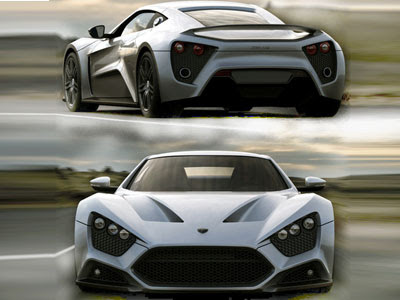
Fledgling Danish supercar manufacturer Zenvo has just released the first official images and final details for the ST1, a brand new supercar from a brand new manufacturer that will join the ranks of the automotive world's elite should it make its production date of early next year. The Zenvo ST1, on paper, looks to compete with the likes of Pagani, Koenigsegg, SSC and Bugatti for the fastest and meanest cars in the world. Probably most expensive as well, though no base price information has been released as of yet.
2010 The Zenvo ST1

Zenvo ST1 is a real supercar with excessive power supplied from a V8 engine with both supercharger and turbo. Zenvo ST1 has 1.104 BHP and 1.430 NM
The car is 100% Danish design. Danish design has always been cutting edge design, but this is the first Danish designed supercar.
At the Zenvo ST1's heart is mysterious 7.0 liter V8 that is rumored to be based on a GM crate motor. The big-displacement V8 is both turbocharged and supercharged, giving the ST1 a power output of 1,104 bhp and 1,055 ft-lb. of torque. In case you were wondering, that puts the Zenvo ST1 power numbers greater than those of the Bugatti Veyron.
2010 The Zenvo ST1

With an electronically limited 233 mph top speed, the ST1 won't be breaking any production land speed records, though. Presumably Zenvo threw the governer into the equation to simplify safety and aerodynamic precautions, as one 200+ mph speeds are reached, stress on tires and body components increases very quickly.
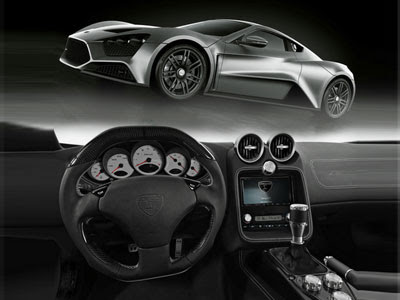
The design brief from the Zenvo creators to the designers at hermann & brandt design consultancy was to design a supercar that looked like no other supercar. The design had to be aggressive mixing supercar styling with race car elements.
2010 The Zenvo ST1

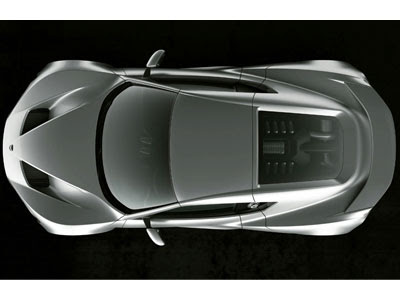
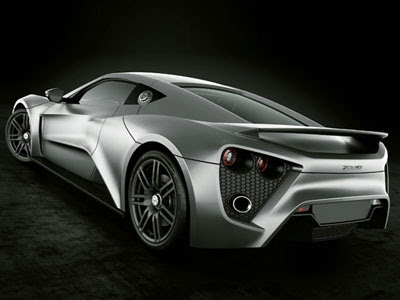
The design of the Zenvo ST1 is made from free flowing accelerating lines creating the shape of the wheel arches, the roof line, side line and the lower side air intake. The sharp lines are connected by muscular organic surfacing creating dramatic reflections. Contrasting the general surfacing the design features a race car inspired lower carbon splitter.
The front of the Zenvo ST1 is designed around the hexagonal trademark Zenvo grille flanked by the large front air intakes used for brakes and engine cooling. The intakes are raked back to minimize drag and at the same time making the side impression of the car more compact.

2010 The Zenvo ST1

The theme of the front is repeated in the rear which is designed around the big diffuser necessary for high speed stability. As on the front the center volume is flanked by large air exits extracting hot engine air as well as housing the exhaust and rear lights.
The rear spoiler mandatory for a car capable of extreme high speeds is partly integrated in the rear wing. It has a unique aerodynamic design following the raked shape of the rear end.

2010 The Zenvo ST1 Super Sports Car By Danish Design

2010 The Zenvo ST1

Fledgling Danish supercar manufacturer Zenvo has just released the first official images and final details for the ST1, a brand new supercar from a brand new manufacturer that will join the ranks of the automotive world's elite should it make its production date of early next year. The Zenvo ST1, on paper, looks to compete with the likes of Pagani, Koenigsegg, SSC and Bugatti for the fastest and meanest cars in the world. Probably most expensive as well, though no base price information has been released as of yet.
2010 The Zenvo ST1

Zenvo ST1 is a real supercar with excessive power supplied from a V8 engine with both supercharger and turbo. Zenvo ST1 has 1.104 BHP and 1.430 NM
The car is 100% Danish design. Danish design has always been cutting edge design, but this is the first Danish designed supercar.
At the Zenvo ST1's heart is mysterious 7.0 liter V8 that is rumored to be based on a GM crate motor. The big-displacement V8 is both turbocharged and supercharged, giving the ST1 a power output of 1,104 bhp and 1,055 ft-lb. of torque. In case you were wondering, that puts the Zenvo ST1 power numbers greater than those of the Bugatti Veyron.

2010 The Zenvo ST1

With an electronically limited 233 mph top speed, the ST1 won't be breaking any production land speed records, though. Presumably Zenvo threw the governer into the equation to simplify safety and aerodynamic precautions, as one 200+ mph speeds are reached, stress on tires and body components increases very quickly.
The design brief from the Zenvo creators to the designers at hermann & brandt design consultancy was to design a supercar that looked like no other supercar. The design had to be aggressive mixing supercar styling with race car elements.
2010 The Zenvo ST1

The design of the Zenvo ST1 is made from free flowing accelerating lines creating the shape of the wheel arches, the roof line, side line and the lower side air intake. The sharp lines are connected by muscular organic surfacing creating dramatic reflections. Contrasting the general surfacing the design features a race car inspired lower carbon splitter.
The front of the Zenvo ST1 is designed around the hexagonal trademark Zenvo grille flanked by the large front air intakes used for brakes and engine cooling. The intakes are raked back to minimize drag and at the same time making the side impression of the car more compact.
2010 The Zenvo ST1

The theme of the front is repeated in the rear which is designed around the big diffuser necessary for high speed stability. As on the front the center volume is flanked by large air exits extracting hot engine air as well as housing the exhaust and rear lights.
The rear spoiler mandatory for a car capable of extreme high speeds is partly integrated in the rear wing. It has a unique aerodynamic design following the raked shape of the rear end.

Friday, December 11, 2009

2009 Infiniti FX37 A Genuine Fusion of Sports Car and SUV

2009 Infiniti FX37 Sports Car and SUV

A genuine fusion of sports car and SUV, the Infiniti FX37's dramatic styling sets it apart from the crowd. Built on Infiniti's FM (front-midships) platform, the Infiniti FX37 blends sports car proportions with the character of a 4x4. That means a long bonnet and wheelbase, short overhangs and a coupé-like roofline, with the stance and strength of an SUV.The Infiniti FX37 is powered by the 3.7-litre V6 petrol engine delivering 320PS at 7,000 rpm and a healthy 360Nm of torque (comparable figures for the V8 FX50 are 390PS and 500Nm).A member of the multi-award winning VQ engine family, the all-aluminium 24-valve twin cam unit features a bed-plate construction. A technique that has been used in motor racing for many years, the resulting two-part construction of the cylinder block is more rigid than a single piece casting.It is a configuration that signifies a high-performance sporting engine designed for the highest strength and reliability. Other benefits include reduced vibration levels and higher engine speeds to be reached consistently without damage.
2009 Infiniti FX37 Sports Car and SUV

Infiniti FX37 comes with a new seven-speed automatic transmission with Adaptive Shift Control (ASC) as standard providing a wider spread of transmission ratios for improved fuel consumption and drivability. The seventh speed is effectively an overdrive ratio, returning improved fuel economy on a steady throttle without compromising in-gear flexibility for overtaking.Suspension design is fully independent and uses lightweight aluminium components to reduce weight as much as possible. With a double wishbone set up at the front, a multi-link arrangement mounted on a subframe behind and an extremely rigid bodyshell, Infiniti FX37 combines agility with exceptional ride comfort.In keeping with its crossover role, Infiniti FX37 features Infiniti's ATTESA E-TS (Advanced Total Traction Engineering System for All Electronic Torque Split) four-wheel drive technology.
2009 Infiniti FX37 Sports Car and SUV

When Infiniti FX37 accelerates from a standing start, ATTESA E-TS system provides power to all four wheels. Once up to speed, if the system's sensors detect that all-wheel drive is not needed, up to 100 percent of the power is sent to the rear wheels. This rear-bias offers better handling balance and improved fuel efficiency.An all-new design, the latest generation FX range adopts Infiniti's signature double-arch grille and 'double wave' frontal styling. The profile is dominated by a strong shoulder-line set off by functional side vents behind the front wheels while the swooping roofline is topped by roof rails, which are fitted as standard. At the rear, distinctive LED taillights wrap around the side of the vehicle.
2009 Infiniti FX37 Sports Car and SUV

The interior provides a driver-oriented cockpit combined with a luxuriously sophisticated passenger compartment. Natural materials including wood and quilted leather can be found throughout while the dashboard features the Infiniti signature double-wave design. Three interior colour schemes are offered: black plus duo-tone beige and grey or brown and black. Power adjustable front seats are ventilated for the ultimate in comfort at all times.Other items of standard equipment include Intelligent Key with keyless go, and Bi-Xenon headlamps with Adaptive Front lighting System (AFS) which automatically controls the aim and patterns of the headlights, based on steering wheel angle and vehicle speed (the headlights can swivel headlights up to 17 degrees).
2009 Infiniti FX37 Sports Car and SUV

“Infiniti FX37 is a significant model for Europe and we expect it to account for as much as 80 per cent of FX sales,” says Jim Wright, Vice President Infiniti Europe. “By combining excellent handling and punchy performance with genuine luxury and SUV practicality, Infiniti FX37 will appeal to customers who appreciate quality and individuality.”

2009 Infiniti FX37 A Genuine Fusion of Sports Car and SUV

2009 Infiniti FX37 Sports Car and SUV

A genuine fusion of sports car and SUV, the Infiniti FX37's dramatic styling sets it apart from the crowd. Built on Infiniti's FM (front-midships) platform, the Infiniti FX37 blends sports car proportions with the character of a 4x4. That means a long bonnet and wheelbase, short overhangs and a coupé-like roofline, with the stance and strength of an SUV.The Infiniti FX37 is powered by the 3.7-litre V6 petrol engine delivering 320PS at 7,000 rpm and a healthy 360Nm of torque (comparable figures for the V8 FX50 are 390PS and 500Nm).A member of the multi-award winning VQ engine family, the all-aluminium 24-valve twin cam unit features a bed-plate construction. A technique that has been used in motor racing for many years, the resulting two-part construction of the cylinder block is more rigid than a single piece casting.It is a configuration that signifies a high-performance sporting engine designed for the highest strength and reliability. Other benefits include reduced vibration levels and higher engine speeds to be reached consistently without damage.
2009 Infiniti FX37 Sports Car and SUV

Infiniti FX37 comes with a new seven-speed automatic transmission with Adaptive Shift Control (ASC) as standard providing a wider spread of transmission ratios for improved fuel consumption and drivability. The seventh speed is effectively an overdrive ratio, returning improved fuel economy on a steady throttle without compromising in-gear flexibility for overtaking.Suspension design is fully independent and uses lightweight aluminium components to reduce weight as much as possible. With a double wishbone set up at the front, a multi-link arrangement mounted on a subframe behind and an extremely rigid bodyshell, Infiniti FX37 combines agility with exceptional ride comfort.In keeping with its crossover role, Infiniti FX37 features Infiniti's ATTESA E-TS (Advanced Total Traction Engineering System for All Electronic Torque Split) four-wheel drive technology.
2009 Infiniti FX37 Sports Car and SUV

When Infiniti FX37 accelerates from a standing start, ATTESA E-TS system provides power to all four wheels. Once up to speed, if the system's sensors detect that all-wheel drive is not needed, up to 100 percent of the power is sent to the rear wheels. This rear-bias offers better handling balance and improved fuel efficiency.An all-new design, the latest generation FX range adopts Infiniti's signature double-arch grille and 'double wave' frontal styling. The profile is dominated by a strong shoulder-line set off by functional side vents behind the front wheels while the swooping roofline is topped by roof rails, which are fitted as standard. At the rear, distinctive LED taillights wrap around the side of the vehicle.
2009 Infiniti FX37 Sports Car and SUV

The interior provides a driver-oriented cockpit combined with a luxuriously sophisticated passenger compartment. Natural materials including wood and quilted leather can be found throughout while the dashboard features the Infiniti signature double-wave design. Three interior colour schemes are offered: black plus duo-tone beige and grey or brown and black. Power adjustable front seats are ventilated for the ultimate in comfort at all times.Other items of standard equipment include Intelligent Key with keyless go, and Bi-Xenon headlamps with Adaptive Front lighting System (AFS) which automatically controls the aim and patterns of the headlights, based on steering wheel angle and vehicle speed (the headlights can swivel headlights up to 17 degrees).
2009 Infiniti FX37 Sports Car and SUV

“Infiniti FX37 is a significant model for Europe and we expect it to account for as much as 80 per cent of FX sales,” says Jim Wright, Vice President Infiniti Europe. “By combining excellent handling and punchy performance with genuine luxury and SUV practicality, Infiniti FX37 will appeal to customers who appreciate quality and individuality.”

Thursday, December 10, 2009

2011 Ferrari 458 Italia 4499 cc V8 is the first Ferrari direct injection engine

2011 Ferrari 458 Italia

Maranello, July 28th 2009 – While it’s true that every Ferrari is innovative by definition, it’s equally true that in the course of the Prancing Horse’s history, certain cars have marked a genuine departure from the current range. This is very much the case with the Ferrari 458 Italia, which is a massive leap forward from the company’s previous mid-rear engined sports cars.
The new model is a synthesis of style, creative flair, passion and cutting-edge technology, characteristics for which Italy as a nation is well-known. For this reason Ferrari chose to add the name of its homeland to the traditional figure representing the displacement and number of cylinders.
The Ferrari 458 Italia is a completely new car from every point of view: engine, design, aerodynamics, handling, instrumentation and ergonomics, just to name a few.

2011 Ferrari 458 Italia

The new 4499 cc V8 is the first Ferrari direct injection engine to be mid-rear mounted. It has a very low piston compression height typical of racing engines which contributed to achieving its compression ratio of 12.5:1. Equipped with the traditional flat-plane crankshaft, the engine delivers 570 CV at 9000 rpm and, with an outstanding power output of 127 CV/litre, sets a new benchmark not only for the whole Ferrari range and the history of company, but also for the entire market segment. Maximum torque is 540 Nm at 6000 rpm, over 80 per cent of which is available from 3250 rpm. Specific torque is a record 120 Nm/litre. However, what is truly extraordinary is the amount of torque available while still maintaining high levels of power at low revs.

2011 Ferrari 458 Italia

The Ferrari 458 Italia is equipped with the seven-speed dual-clutch transmission which increases performance whilst providing very smooth shifts even at full throttle. The engineers have developed specific, sportier gear ratios to match the power and torque curves of the new V8, guaranteeing high torque even at lower engine speeds and allowing the car to reach its maximum speed in top gear.


2011 Ferrari 458 Italia

A two-seater berlinetta, the Ferrari 458 Italia, as is now traditional for all Ferrari's road-going cars, benefits hugely from the company's Formula 1 experience. This is particularly evident in the speed and precision with which the car responds to driver inputs and in the attention focused on reducing internal friction in the engine for lower fuel consumption than the Ferrari F430, despite the fact that both overall displacement and power have increased. However, Ferrari's track experience makes its presence felt in the Ferrari 458 Italia not only in terms of pure technological transfer but also on a more emotional level, because of the strong emphasis on creating an almost symbiotic relationship between driver and car. The Ferrari 458 Italia features an innovative driving environment with a new kind of steering wheel and dashboard that is the direct result of racing practice. Once agThe Ferrari 458 Italia's Pininfarina design provides further evidence of the complete departure from the past that this new car hails.
2011 Ferrari 458 Italia

With the Ferrari 458 Italia, Maranello has brought a highly distinctive new car to its 8-cylinder range. The company now offers two models that share a common, race-derived DNA, both exceptionally sporty and fun to drive in true Ferrari tradition, but aimed at two very different kinds of client. While the Ferrari California was created for owners requiring a more versatile sports car with a practical edge, the 458 Italia is designed for owners for whom the priority is uncompromising on-road performance with occasional track day capability, but who still demand a car that is useable in day-to-day driving like all Ferrari’s recent models.

2011 Ferrari 458 Italia 4499 cc V8 is the first Ferrari direct injection engine

2011 Ferrari 458 Italia

Maranello, July 28th 2009 – While it’s true that every Ferrari is innovative by definition, it’s equally true that in the course of the Prancing Horse’s history, certain cars have marked a genuine departure from the current range. This is very much the case with the Ferrari 458 Italia, which is a massive leap forward from the company’s previous mid-rear engined sports cars.
The new model is a synthesis of style, creative flair, passion and cutting-edge technology, characteristics for which Italy as a nation is well-known. For this reason Ferrari chose to add the name of its homeland to the traditional figure representing the displacement and number of cylinders.
The Ferrari 458 Italia is a completely new car from every point of view: engine, design, aerodynamics, handling, instrumentation and ergonomics, just to name a few.

2011 Ferrari 458 Italia

The new 4499 cc V8 is the first Ferrari direct injection engine to be mid-rear mounted. It has a very low piston compression height typical of racing engines which contributed to achieving its compression ratio of 12.5:1. Equipped with the traditional flat-plane crankshaft, the engine delivers 570 CV at 9000 rpm and, with an outstanding power output of 127 CV/litre, sets a new benchmark not only for the whole Ferrari range and the history of company, but also for the entire market segment. Maximum torque is 540 Nm at 6000 rpm, over 80 per cent of which is available from 3250 rpm. Specific torque is a record 120 Nm/litre. However, what is truly extraordinary is the amount of torque available while still maintaining high levels of power at low revs.

2011 Ferrari 458 Italia

The Ferrari 458 Italia is equipped with the seven-speed dual-clutch transmission which increases performance whilst providing very smooth shifts even at full throttle. The engineers have developed specific, sportier gear ratios to match the power and torque curves of the new V8, guaranteeing high torque even at lower engine speeds and allowing the car to reach its maximum speed in top gear.


2011 Ferrari 458 Italia

A two-seater berlinetta, the Ferrari 458 Italia, as is now traditional for all Ferrari's road-going cars, benefits hugely from the company's Formula 1 experience. This is particularly evident in the speed and precision with which the car responds to driver inputs and in the attention focused on reducing internal friction in the engine for lower fuel consumption than the Ferrari F430, despite the fact that both overall displacement and power have increased. However, Ferrari's track experience makes its presence felt in the Ferrari 458 Italia not only in terms of pure technological transfer but also on a more emotional level, because of the strong emphasis on creating an almost symbiotic relationship between driver and car. The Ferrari 458 Italia features an innovative driving environment with a new kind of steering wheel and dashboard that is the direct result of racing practice. Once agThe Ferrari 458 Italia's Pininfarina design provides further evidence of the complete departure from the past that this new car hails.
2011 Ferrari 458 Italia

With the Ferrari 458 Italia, Maranello has brought a highly distinctive new car to its 8-cylinder range. The company now offers two models that share a common, race-derived DNA, both exceptionally sporty and fun to drive in true Ferrari tradition, but aimed at two very different kinds of client. While the Ferrari California was created for owners requiring a more versatile sports car with a practical edge, the 458 Italia is designed for owners for whom the priority is uncompromising on-road performance with occasional track day capability, but who still demand a car that is useable in day-to-day driving like all Ferrari’s recent models.

Wednesday, December 9, 2009

2011 Mercedes-Benz SLS AMG The Super Sports Car Debut at The Frankfurt Motor Show

2011 Mercedes-Benz SLS AMG

Mercedes-Benz’s highly-anticipated SLS AMG, which takes the iconic 300SL Gullwing to the next generation, is set to debut next week at the Frankfurt Motor Show.
“With the new SLS AMG, Mercedes-Benz is presenting a fascinating super sports car that will quicken the pulse of any car fan. The SLS AMG bolsters both the Mercedes-Benz and AMG brands equally, and will surely become one of the most alluring sports cars of our time,” says Dr. Dieter Zetsche, Chairman of the Board of Management of Daimler AG and Head of Mercedes-Benz Cars.
2011 Mercedes-Benz SLS AMG

The performance highlights start under the long, shapely hood: 6.3-liters of AMG-massaged V8 will pump out 571 horsepower at 6,800 rpm and 480 lb-ft. of torque at 4,750 rpm transmitted to the transaxle-mounted seven-speed SpeedShift dual-clutch transmission. With this powertrain, the SLS AMG will accelerate to 62 mph in 3.8 seconds before topping out at about 197 mph.
Stuttgart/Affalterbach — Automotive fascination and high tech of the highest order: These are the traits embodied by the new Mercedes-Benz SLS AMG, which is making its world premiere at the International Motor Show (IAA) in Frankfurt on 15 September 2009. The super sports car boasts a purist design, the systematic incorporation of lightweight engineering and superior handling dynamics. At the same time, the SLS delivers the high everyday utility and exemplary safety that typifies Mercedes-Benz, making the new gullwing the ideal synthesis of the strengths of Mercedes-Benz and AMG.
2011 Mercedes-Benz SLS AMG

The new super sports car from Mercedes-Benz and AMG dazzles with its unparalleled technology package which includes: an aluminium space frame body with gullwing doors; an AMG 6.3-litre, front-mid V8 engine with a top power of 571 hp, 650 Nm of torque, and dry sump lubrication; seven-speed dual-clutch in a transaxle configuration; a sports chassis with aluminium double-wishbone suspension; and a kerb weight of 1,620 kilograms. It's a combination that guarantees supreme handling dynamics. The car's ideal weight distribution between the front and rear axles (47 to 53 per cent respectively) and its low centre of gravity emphasize the concept's pronounced sports car nature.
2011 Mercedes-Benz SLS AMG

The gullwing accelerates from 0 to 62 mph in 3.8 seconds and has a top speed of 197 mph (electronically limited). The fuel consumption of 21.4 mpg (combined) is best-in-class (all figures are provisional).“With the new SLS AMG, Mercedes-Benz is presenting a fascinating super sports car that will quicken the pulse of any car fan. The SLS AMG bolsters both the Mercedes-Benz and AMG brands equally, and will surely become one of the most alluring sports cars of our time,” says Dr. Dieter Zetsche, Chairman of the Board of Management of Daimler AG and Head of Mercedes-Benz Cars.
2011 Mercedes-Benz SLS AMG

Mercedes-Benz says the SLS AMG will retail from €177,310 (including VAT) in Europe when it goes on sale in spring of 2010, although the automaker has not released pricing or an on-sale date for North America.


2011 Mercedes-Benz SLS AMG The Super Sports Car Debut at The Frankfurt Motor Show

2011 Mercedes-Benz SLS AMG

Mercedes-Benz’s highly-anticipated SLS AMG, which takes the iconic 300SL Gullwing to the next generation, is set to debut next week at the Frankfurt Motor Show.
“With the new SLS AMG, Mercedes-Benz is presenting a fascinating super sports car that will quicken the pulse of any car fan. The SLS AMG bolsters both the Mercedes-Benz and AMG brands equally, and will surely become one of the most alluring sports cars of our time,” says Dr. Dieter Zetsche, Chairman of the Board of Management of Daimler AG and Head of Mercedes-Benz Cars.
2011 Mercedes-Benz SLS AMG

The performance highlights start under the long, shapely hood: 6.3-liters of AMG-massaged V8 will pump out 571 horsepower at 6,800 rpm and 480 lb-ft. of torque at 4,750 rpm transmitted to the transaxle-mounted seven-speed SpeedShift dual-clutch transmission. With this powertrain, the SLS AMG will accelerate to 62 mph in 3.8 seconds before topping out at about 197 mph.
Stuttgart/Affalterbach — Automotive fascination and high tech of the highest order: These are the traits embodied by the new Mercedes-Benz SLS AMG, which is making its world premiere at the International Motor Show (IAA) in Frankfurt on 15 September 2009. The super sports car boasts a purist design, the systematic incorporation of lightweight engineering and superior handling dynamics. At the same time, the SLS delivers the high everyday utility and exemplary safety that typifies Mercedes-Benz, making the new gullwing the ideal synthesis of the strengths of Mercedes-Benz and AMG.
2011 Mercedes-Benz SLS AMG

The new super sports car from Mercedes-Benz and AMG dazzles with its unparalleled technology package which includes: an aluminium space frame body with gullwing doors; an AMG 6.3-litre, front-mid V8 engine with a top power of 571 hp, 650 Nm of torque, and dry sump lubrication; seven-speed dual-clutch in a transaxle configuration; a sports chassis with aluminium double-wishbone suspension; and a kerb weight of 1,620 kilograms. It's a combination that guarantees supreme handling dynamics. The car's ideal weight distribution between the front and rear axles (47 to 53 per cent respectively) and its low centre of gravity emphasize the concept's pronounced sports car nature.
2011 Mercedes-Benz SLS AMG

The gullwing accelerates from 0 to 62 mph in 3.8 seconds and has a top speed of 197 mph (electronically limited). The fuel consumption of 21.4 mpg (combined) is best-in-class (all figures are provisional).“With the new SLS AMG, Mercedes-Benz is presenting a fascinating super sports car that will quicken the pulse of any car fan. The SLS AMG bolsters both the Mercedes-Benz and AMG brands equally, and will surely become one of the most alluring sports cars of our time,” says Dr. Dieter Zetsche, Chairman of the Board of Management of Daimler AG and Head of Mercedes-Benz Cars.
2011 Mercedes-Benz SLS AMG

Mercedes-Benz says the SLS AMG will retail from €177,310 (including VAT) in Europe when it goes on sale in spring of 2010, although the automaker has not released pricing or an on-sale date for North America.


Friday, December 4, 2009

2009 Audi e-Tron Concept Car A High-Performance Sports Car

2009 Audi e-Tron Concept Car

The Audi e-tron Concept 2009, a high-performance sports car with a purely electric drive system. Four motors - two each at the front and rear axles - drive the wheels, making the concept car a true quattro. Producing 230 kW (313 hp) and 4,500 Nm (3,319.03 lb-ft) of torque, the two-seater accelerates from 0 to 100 km/h (0 - 62.14 mph) in 4.8 seconds, and from 60 to 120 km/h (37.28 - 74.56 mph) in 4.1 seconds. The lithium-ion battery provides a truly useable energy content of 42.4 kilowatt hours to enable a range of approximately 248 kilometers.

2009 Audi e-Tron Concept Car

The performance figures are by no means the only evidence of the consistent and holistic strategy. The design makes it clear that the Audi e-tron Concept belongs in the major leagues of sports cars, and the package takes into account the specific realities of an electric vehicle. The battery is directly behind the passenger cabin for an optimal center of gravity and axle load distribution.

2009 Audi e-Tron Concept Car

The Audi e-tron Concept is able to freely distribute the powerful torque of its four electric motors to the wheels as required. This so-called torque vectoring allows for dazzling dynamics and an undreamed-of level of agility and precision when cornering.
The electric driving potentially offers numerous advantages. Electric cars reduce the dependence of transportation and the economy on the raw material petroleum. They produce no direct exhaust emissions and thus ease the local burden on the environment.
2009 Audi e-Tron Concept Car

Electric drive systems are also significantly more efficient than combustion engines, consequently making them easier on the customers' wallets. Other strengths include sportiness and the fun they bring to driving. All of Audi has taken a new and in some cases revolutionary approach to many of the technical modules. A heat pump is used to efficiently warm up and heat the interior.
2009 Audi e-Tron Concept Car

The drive system, the power electronics and the battery are controlled by an innovative thermal management system that is a crucial component for achieving the car's range without compromising its high level of interior comfort. Networking the vehicle electronics with the surroundings, which is referred to as car-to-x communication, opens new dimensions for the optimization of efficiency, safety and convenience.

2009 Audi e-Tron Concept Car A High-Performance Sports Car

2009 Audi e-Tron Concept Car

The Audi e-tron Concept 2009, a high-performance sports car with a purely electric drive system. Four motors - two each at the front and rear axles - drive the wheels, making the concept car a true quattro. Producing 230 kW (313 hp) and 4,500 Nm (3,319.03 lb-ft) of torque, the two-seater accelerates from 0 to 100 km/h (0 - 62.14 mph) in 4.8 seconds, and from 60 to 120 km/h (37.28 - 74.56 mph) in 4.1 seconds. The lithium-ion battery provides a truly useable energy content of 42.4 kilowatt hours to enable a range of approximately 248 kilometers.

2009 Audi e-Tron Concept Car

The performance figures are by no means the only evidence of the consistent and holistic strategy. The design makes it clear that the Audi e-tron Concept belongs in the major leagues of sports cars, and the package takes into account the specific realities of an electric vehicle. The battery is directly behind the passenger cabin for an optimal center of gravity and axle load distribution.

2009 Audi e-Tron Concept Car

The Audi e-tron Concept is able to freely distribute the powerful torque of its four electric motors to the wheels as required. This so-called torque vectoring allows for dazzling dynamics and an undreamed-of level of agility and precision when cornering.
The electric driving potentially offers numerous advantages. Electric cars reduce the dependence of transportation and the economy on the raw material petroleum. They produce no direct exhaust emissions and thus ease the local burden on the environment.
2009 Audi e-Tron Concept Car

Electric drive systems are also significantly more efficient than combustion engines, consequently making them easier on the customers' wallets. Other strengths include sportiness and the fun they bring to driving. All of Audi has taken a new and in some cases revolutionary approach to many of the technical modules. A heat pump is used to efficiently warm up and heat the interior.
2009 Audi e-Tron Concept Car

The drive system, the power electronics and the battery are controlled by an innovative thermal management system that is a crucial component for achieving the car's range without compromising its high level of interior comfort. Networking the vehicle electronics with the surroundings, which is referred to as car-to-x communication, opens new dimensions for the optimization of efficiency, safety and convenience.